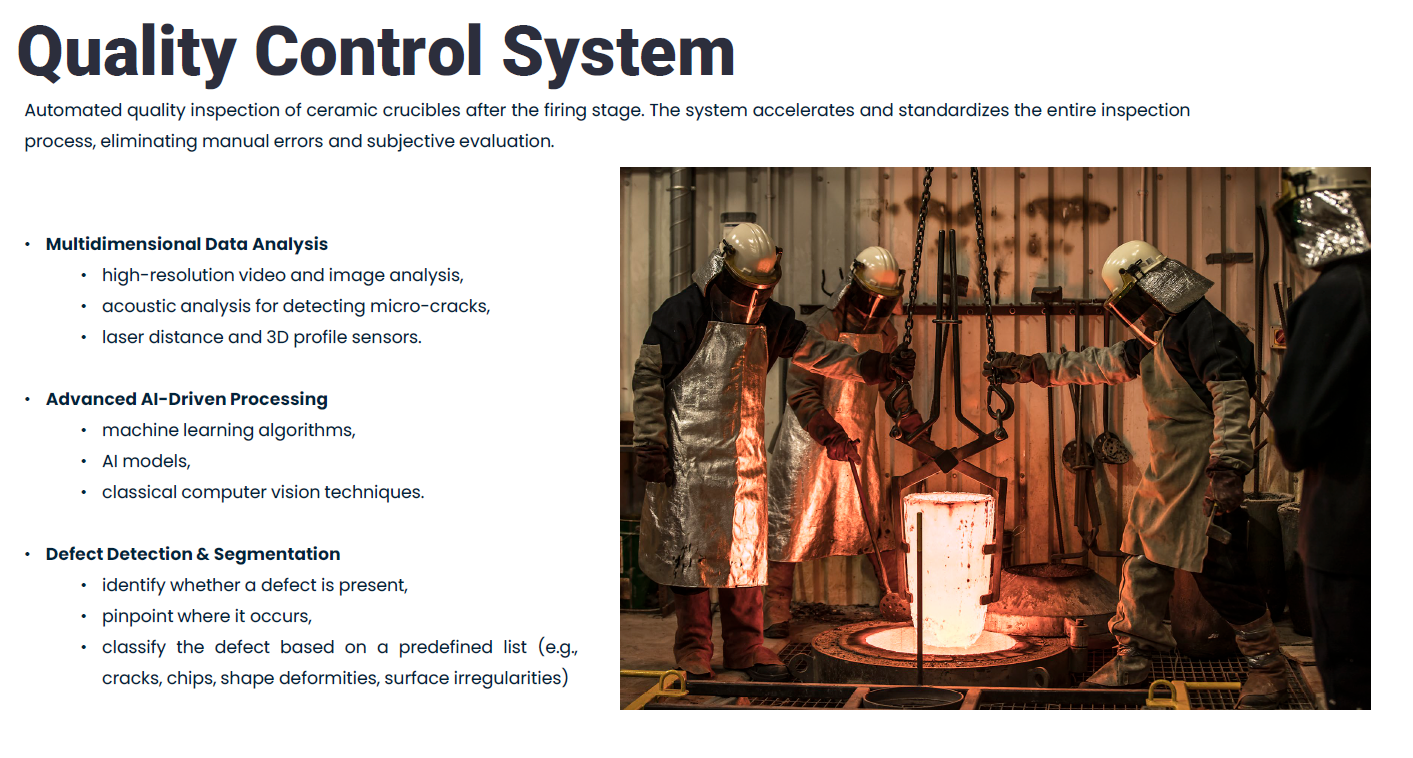
The system combines multiple sensing modalities to detect surface, structural, and geometric defects that are difficult or impossible to identify through manual inspection.
By integrating vision systems, laser profiling, and acoustic analysis with advanced machine learning and classical computer vision algorithms, the platform delivers precise defect detection, localization, and classification in harsh industrial environments.
Laser Sensors
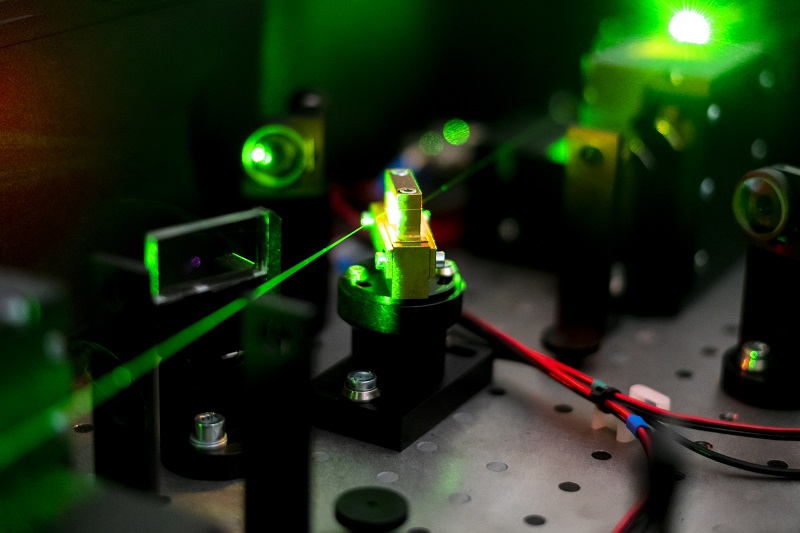
High-precision laser distance and profiling sensors enable accurate geometric and surface analysis of ceramic crucibles.
- 3D surface profiling to detect deformations, dents, and warping
- High-accuracy distance measurements for dimensional consistency
- Real-time scanning with continuous geometric data acquisition
- Reliable operation in harsh industrial environments
Acoustic Sensors
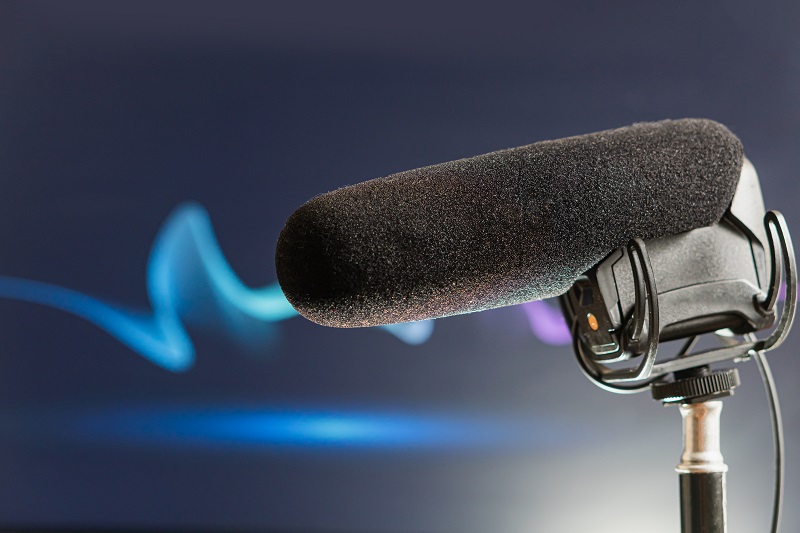
Acoustic sensors analyze sound signatures generated by controlled mechanical excitation to identify internal defects.
- Resonance-based detection of micro-cracks
- Frequency and decay analysis for structural integrity
- Non-destructive testing without material damage
- Automated, repeatable evaluation using AI and signal processing
Vision System
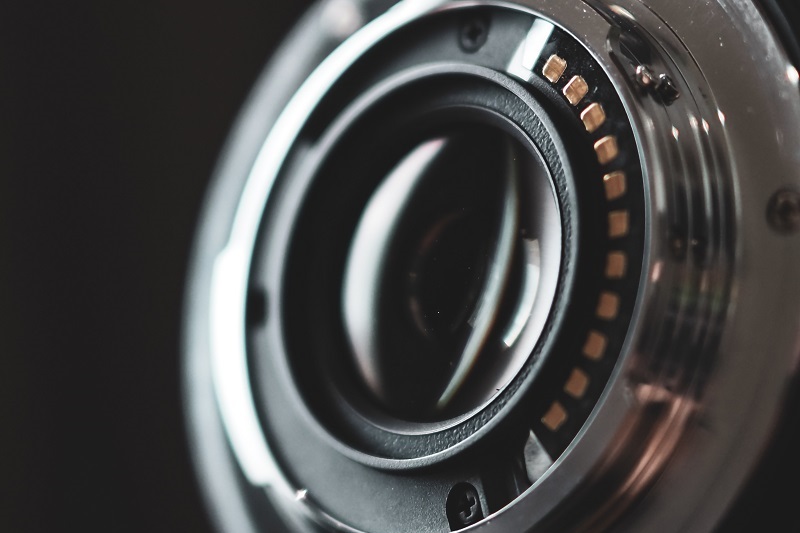
High-resolution vision systems provide detailed surface inspection using AI-driven image analysis.
- Detection of cracks, chips, discolorations, and surface irregularities
- AI-powered defect classification and segmentation
- Multi-angle camera coverage for complete inspection
- Real-time analysis on the production line